
Motorcyclists often look for ways to navigate heavy traffic safely and efficiently. One riding practice that frequently sparks debate is lane splitting, where a motorcycle travels between lanes of slow-moving or stopped vehicles. While this practice is legal in some parts of the United States, many riders are unsure whether the same rules apply in Texas.
If you’re planning to ride in Texas or already own a motorcycle, understanding the state’s traffic laws is essential. A misunderstanding about lane splitting could lead to traffic citations, insurance disputes, or even affect your ability to recover compensation after an accident.
The short answer is no. Lane splitting is not legal in Texas. Texas law does not authorize motorcyclists to ride between lanes of moving traffic. Although there is no statute that specifically uses the phrase “lane splitting,” riders who engage in the practice may still violate existing traffic laws and could be found partially or entirely at fault if a collision occurs.
This guide explains everything you need to know about Texas lane splitting laws, including how lane splitting differs from lane filtering, what penalties riders may face, how accidents are handled, and what every motorcyclist should know before taking the road.
Quick Answer
Is lane splitting legal in Texas?
No. Lane splitting is not legal in Texas. Motorcyclists are generally expected to remain within a single traffic lane just like other vehicles. Riding between two lanes of moving traffic is not permitted under current Texas traffic laws and may result in traffic citations or liability issues if an accident occurs.
What Is Lane Splitting?
Lane splitting is the practice of riding a motorcycle between two adjacent lanes of traffic moving in the same direction. Instead of waiting behind other vehicles, the rider travels through the space separating lanes to move ahead.
For example, imagine traffic slowing to a crawl during rush hour on a Texas interstate. Rather than remaining behind the line of vehicles, a motorcyclist rides between the left and center lanes to bypass congestion. This maneuver is commonly referred to as lane splitting.
Lane splitting is most often seen in areas with severe traffic congestion because some riders believe it helps reduce travel time and lowers the risk of being struck from behind while stopped in traffic. However, the legality of this practice varies significantly from state to state.
Why Do Riders Lane Split?
Motorcyclists may choose to lane split for several reasons, including:
- Avoiding long traffic delays.
- Reducing exposure to rear-end collisions.
- Preventing motorcycles from overheating in stop-and-go traffic.
- Improving overall traffic flow.
- Reaching destinations more quickly during heavy congestion.
Although these reasons are often cited by supporters, they do not make lane splitting legal in every state. Riders must always follow the laws of the jurisdiction in which they are traveling.
Is Lane Splitting Legal in Texas?
The answer is straightforward: No. Lane splitting is not legal in Texas.
Unlike a few states that have adopted laws permitting lane splitting or limited lane filtering, Texas has not enacted legislation allowing motorcycles to travel between lanes of moving traffic.
What Does Texas Law Say?
Texas traffic laws require vehicles, including motorcycles, to operate within a single lane whenever practical. A motorcycle is generally afforded the same rights and responsibilities as any other motor vehicle on the road.
While Texas statutes may not specifically define the term “lane splitting,” existing traffic regulations effectively prohibit the practice because riders are expected to remain within their designated lane.
As a result, a rider who travels between lanes could be cited under applicable traffic laws if law enforcement determines the maneuver was unsafe or violated lane usage requirements.
Why Doesn’t the Law Specifically Mention Lane Splitting?
Many people assume that because Texas law doesn’t explicitly say “lane splitting is illegal,” the practice must be allowed. That’s a common misconception.
Traffic laws are often written broadly rather than addressing every possible driving behavior. Instead of naming lane splitting directly, Texas laws establish general rules regarding lane usage, safe driving, and vehicle operation. These provisions are what law enforcement officers rely on when evaluating a rider’s actions.
Can You Receive a Citation?
Yes.
Depending on the circumstances, a motorcyclist who lane splits may receive citations for traffic violations such as:
- Unsafe lane changes.
- Failure to remain within a single lane.
- Reckless or careless driving if the maneuver creates danger.
- Other moving violations based on the specific facts of the incident.
The exact citation depends on how the maneuver occurred and whether it contributed to unsafe driving conditions.
Can Lane Splitting Affect an Accident Claim?
Absolutely.
If a motorcyclist is involved in a collision while lane splitting, investigators and insurance companies will examine whether the rider’s actions contributed to the crash.
Even if another driver made a mistake, lane splitting may influence how fault is assigned. This can significantly affect insurance claims and personal injury compensation, topics discussed later in this guide.
Why Is Lane Splitting Illegal in Texas?
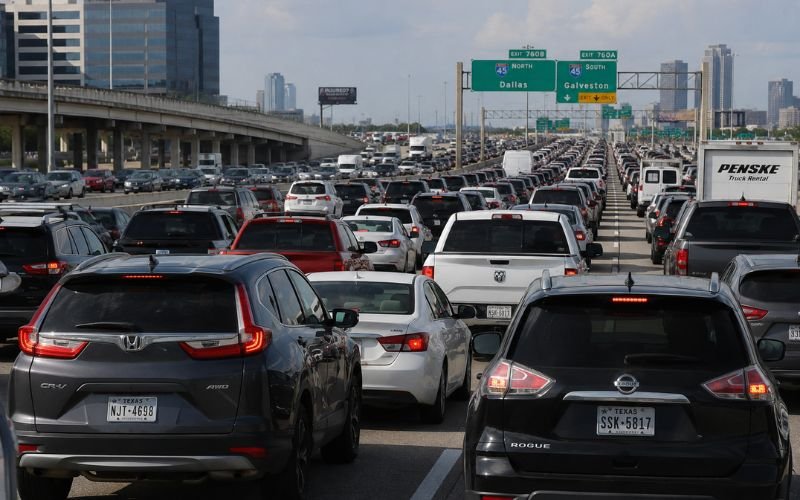
Texas lawmakers have not adopted legislation permitting lane splitting, largely because of ongoing safety concerns. Although supporters argue that lane splitting can reduce congestion and certain types of crashes, opponents believe it introduces additional risks for both motorcyclists and drivers.
Several factors contribute to Texas’ current legal position.
Limited Driver Expectation
Most Texas drivers do not expect motorcycles to appear between traffic lanes.
When a rider suddenly passes between vehicles, drivers changing lanes may have little time to react, increasing the likelihood of a collision.
Reduced Visibility
Motorcycles are already smaller than passenger vehicles.
When traveling between lanes, they may remain in drivers’ blind spots for extended periods, making them difficult to detect before a lane change.
Speed Differences
One of the greatest concerns involves speed differentials.
If surrounding traffic is moving slowly while a motorcycle travels significantly faster between lanes, the available reaction time decreases substantially.
Even a minor steering adjustment by another driver can lead to a serious crash.
Dense Urban Traffic
Major metropolitan areas in Texas experience heavy congestion throughout the day.
Cities such as Houston, Dallas, Austin, and San Antonio often have multiple lanes of traffic with frequent merging, making lane splitting particularly hazardous.
Enforcement Challenges
Allowing lane splitting would require detailed regulations addressing:
- Maximum allowable speeds.
- Traffic conditions.
- Road types.
- Safe passing distances.
- Rider responsibilities.
Without a comprehensive legal framework, enforcement becomes difficult and inconsistent.
Texas Motorcycle Laws Every Rider Should Know
Lane splitting is only one aspect of motorcycle regulation in Texas. Riders should also understand several other important laws before operating a motorcycle on public roads.
| Requirement | Texas Law |
| Motorcycle License | Riders must obtain the appropriate Class M motorcycle license or endorsement before operating a motorcycle. |
| Helmet Requirements | Riders under 21 must wear a helmet. Riders 21 and older may qualify for certain exceptions if they meet legal requirements, although wearing a DOT-compliant helmet is strongly recommended for safety. |
| Eye Protection | Appropriate eye protection is recommended when the motorcycle does not have a windshield that provides adequate protection. |
| Insurance | Motorcyclists must carry the minimum liability insurance required under Texas law, just like other motorists. |
| Registration | Every motorcycle operated on public roads must be properly registered with the state. |
| Traffic Signals | Riders must obey all traffic lights, stop signs, lane markings, and speed limits. |
| Lane Usage | Motorcycles are generally expected to occupy a single lane and follow the same lane-use rules that apply to other vehicles. |
| Passengers | Passengers may only be carried if the motorcycle is properly equipped with a designated passenger seat and footrests. |
Understanding these requirements not only helps riders avoid traffic violations but also strengthens their position if they are involved in an insurance claim or legal dispute following an accident.
Lane Splitting vs. Lane Filtering vs. Lane Sharing
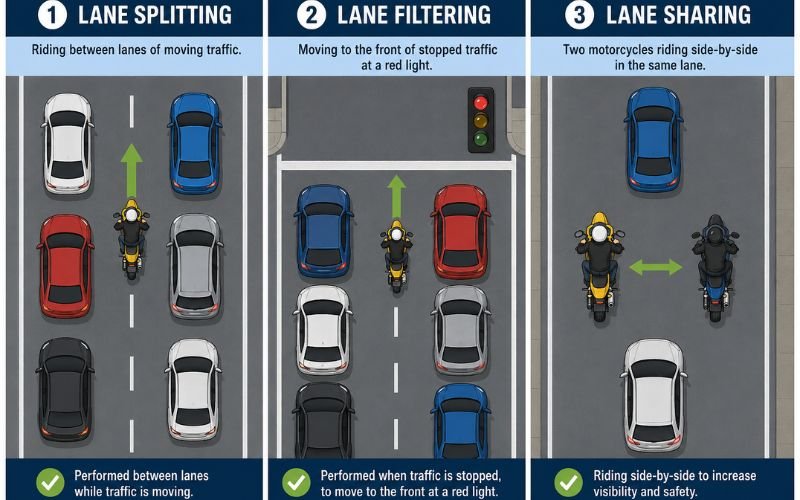
Many riders use these terms interchangeably, but they describe different riding practices with different legal implications. Understanding the distinctions is essential before riding in Texas.
| Feature | Lane Splitting | Lane Filtering | Lane Sharing |
| Definition | Riding between lanes of moving traffic | Moving between stopped or very slow vehicles to reach the front of traffic | Two motorcycles riding side by side within the same lane |
| Traffic Condition | Moving traffic | Stopped or slow-moving traffic | Normal traffic |
| Typical Purpose | Bypass congestion | Reach the front at intersections | Ride together safely |
| Common Legal Status | Legal in only a limited number of jurisdictions | Permitted in some states under specific conditions | Generally permitted when done safely by two motorcycles |
| Texas Status | Not legal | Not generally authorized under current law | Permitted when two motorcycles safely share a lane |
Knowing these differences helps riders avoid confusion, especially when traveling across state lines where motorcycle laws may vary.
However, if the rider’s behavior is especially dangerous—such as excessive speeding, weaving aggressively through traffic, or causing serious injuries—the incident could result in more severe legal consequences depending on the facts of the case.
Can Lane Splitting Affect Your Driving Record?
Yes.
Traffic citations may appear on a rider’s driving record, depending on the violation. Multiple moving violations can lead to increased insurance premiums and may negatively affect future insurance eligibility.
Motorcyclists should remember that insurance companies review driving history when determining policy rates and risk.
Who Is at Fault in a Lane Splitting Motorcycle Accident?
One of the biggest misconceptions is that the motorcyclist is automatically at fault if lane splitting was involved in an accident.
The reality is much more complicated.
Determining fault depends on the specific facts of the crash, available evidence, witness statements, police reports, and applicable traffic laws.
Lane Splitting Does Not Automatically Decide Fault
Even if a rider was lane splitting, another driver may still share responsibility for the collision.
For example, a driver who changes lanes without signaling, drives while distracted, or fails to check mirrors before merging may also have contributed to the accident.
Insurance companies investigate the conduct of every party involved rather than relying on a single factor.
Evidence Used to Determine Liability
After a motorcycle accident, investigators may examine:
- Police accident reports.
- Dashcam footage.
- Traffic camera recordings.
- Photographs of the accident scene.
- Vehicle damage.
- Skid marks.
- Witness statements.
- Cell phone records in distracted driving cases.
- Expert accident reconstruction when necessary.
The more evidence available, the easier it becomes to determine how the crash occurred.
Comparative Negligence in Texas
Texas follows a modified comparative negligence rule.
Under this system, more than one party can share responsibility for an accident.
For example:
- A driver changes lanes without checking blind spots.
- A motorcyclist is lane splitting between vehicles.
- Both actions contribute to the collision.
In that situation, responsibility may be divided between the driver and the motorcyclist.
If an injured rider is found partially responsible, any compensation awarded may be reduced according to that percentage of fault. If the rider’s share of responsibility exceeds the legal threshold established under Texas law, recovering damages may no longer be possible.
This is why every motorcycle accident requires an individual legal analysis rather than assuming fault based solely on lane splitting.
Can You Recover Compensation After a Lane Splitting Accident?
Yes—depending on the circumstances.
Being involved in lane splitting does not automatically prevent an injured motorcyclist from pursuing compensation.
If another driver’s negligence contributed to the crash, the rider may still have the right to seek damages, although the amount recoverable could be reduced if the rider is found partially responsible.
Types of Compensation That May Be Available
Depending on the severity of the accident, compensation may include:
Medical Expenses
Motorcycle crashes often result in serious injuries that require emergency treatment, surgery, hospitalization, rehabilitation, and long-term medical care.
Victims may seek compensation for both current and future medical expenses related to the accident.
Lost Income
Serious injuries can prevent riders from returning to work for weeks or months.
Compensation may include:
- Lost wages.
- Reduced earning capacity.
- Loss of future income if permanent injuries occur.
Property Damage
Motorcycles frequently sustain significant damage during collisions.
Recoverable losses may include repair costs or the fair market value of the motorcycle if it is declared a total loss.
Pain and Suffering
In some cases, injured riders may also seek damages for:
- Physical pain.
- Emotional distress.
- Permanent disability.
- Reduced quality of life.
- Scarring or disfigurement.
The amount depends on the severity of the injuries and the evidence presented.
Does Insurance Cover Lane Splitting Accidents?
Insurance coverage depends on several factors, including:
- The type of insurance policy.
- The facts surrounding the accident.
- Who is determined to be at fault.
- The extent of the rider’s injuries and property damage.
Simply because lane splitting was involved does not automatically mean an insurance company will deny a claim.
Liability Insurance
Liability insurance generally pays for injuries and property damage caused to others when the insured driver is legally responsible for an accident.
If another driver is primarily responsible for the collision, their liability insurance may provide compensation to the injured motorcyclist.
Collision Coverage
Collision coverage may help pay for repairs to the motorcycle regardless of who caused the accident, subject to policy terms, deductibles, and coverage limits.
Medical Payments Coverage
Some policies include medical payments coverage that helps pay certain medical expenses after an accident, regardless of fault.
Coverage varies by policy, so riders should carefully review their insurance documents.
Can Insurance Companies Reduce a Settlement?
Yes.
Insurance adjusters often investigate whether lane splitting contributed to the accident.
If they conclude that the rider shares responsibility, they may attempt to reduce the settlement amount based on comparative negligence principles.
Because motorcycle accident claims can become legally complex, many injured riders choose to consult an attorney before accepting a settlement offer.
States Where Lane Splitting Is Legal
Lane splitting laws vary widely across the United States. While Texas does not permit lane splitting, several states have adopted different approaches to motorcycle traffic management.
The following table provides a general overview.
| State | Lane Splitting Status |
| California | Legal under state law and recognized riding guidelines. |
| Arizona | Does not generally allow lane splitting but permits limited lane filtering under specific conditions. |
| Utah | Limited lane filtering is permitted in certain situations. |
| Montana | Allows limited forms of motorcycle lane filtering under state law. |
| Colorado | Lane splitting is generally prohibited. |
| Florida | Lane splitting is prohibited. |
| Texas | Lane splitting is not legal. |
| New York | Lane splitting is prohibited. |
Motorcyclists traveling across state lines should always review the laws of each jurisdiction before riding, as legal requirements differ significantly.
Why Some Riders Support Legalizing Lane Splitting
Although lane splitting remains illegal in Texas, many motorcycle organizations and safety advocates continue to support legalizing the practice under carefully regulated conditions.
Supporters often point to research and experiences from jurisdictions where lane splitting is permitted.
Some commonly cited benefits include:
- Reducing traffic congestion.
- Decreasing rear-end collisions involving stopped motorcycles.
- Improving overall traffic flow.
- Reducing motorcycle engine overheating during extended traffic delays.
- Allowing riders to spend less time exposed to heavy traffic.
Some transportation experts argue that when performed at low speeds and under clearly defined rules, lane splitting can improve rider safety.
However, these arguments remain the subject of ongoing debate.
Why Others Oppose Lane Splitting
Opponents believe the risks outweigh the potential benefits.
Their concerns generally focus on driver expectations and unpredictable traffic behavior.
Common arguments include:
- Drivers often do not expect motorcycles between lanes.
- Sudden lane changes increase collision risk.
- Visibility is limited in heavy traffic.
- Small speed differences can quickly become dangerous.
- Determining fault after an accident becomes more complicated.
- Public education and enforcement would require significant resources.
These concerns have contributed to Texas maintaining its current legal position regarding lane splitting.
Could Texas Legalize Lane Splitting in the Future?
Motorcycle laws continue to evolve across the United States.
As additional states study lane splitting and lane filtering, discussions occasionally arise about whether Texas should consider similar legislation.
Any future change would require action by the Texas Legislature. Lawmakers would likely evaluate factors such as:
- Highway safety data.
- Crash statistics.
- Experiences from other states.
- Recommendations from transportation and public safety agencies.
- Input from law enforcement, insurance companies, and motorcycle advocacy groups.
Until new legislation is enacted, riders should assume that lane splitting is not permitted in Texas and should continue to operate their motorcycles within a single lane of traffic.
Safety Tips for Texas Motorcyclists
Regardless of whether you’re commuting through a major city or taking a weekend ride across the state, following safe riding practices can significantly reduce your risk of being involved in an accident. Since lane splitting is not legal in Texas, riders should focus on defensive riding techniques and comply with all applicable traffic laws.
1. Stay Within Your Lane
Motorcycles have the same rights and responsibilities as other vehicles on Texas roads. Remain within a single lane unless making a lawful lane change, and avoid riding between lanes of moving traffic.
2. Wear a DOT-Compliant Helmet
Even when a rider qualifies for a helmet law exemption, wearing a U.S. Department of Transportation (DOT)-compliant helmet can greatly reduce the risk of serious head injuries in a crash.
3. Make Yourself Visible
Many motorcycle accidents occur because other drivers fail to notice a motorcycle. Increase your visibility by:
- Wearing bright or reflective riding gear.
- Using your headlight during the day.
- Avoiding prolonged travel in another vehicle’s blind spot.
- Signaling well before changing lanes or turning.
4. Maintain a Safe Following Distance
Following vehicles too closely reduces your reaction time. Leave enough space between your motorcycle and the vehicle ahead, especially during poor weather or heavy traffic.
5. Watch for Distracted Drivers
Drivers who are texting, using navigation systems, or otherwise distracted may fail to notice motorcycles. Stay alert and anticipate sudden lane changes or unexpected stops.
6. Obey Speed Limits
Speeding reduces your ability to react to hazards and increases the severity of collisions. Ride at a speed appropriate for traffic, road, and weather conditions.
7. Inspect Your Motorcycle Before Every Ride
A quick pre-ride inspection can help identify mechanical issues before they become safety hazards. Check:
- Tire pressure and tread.
- Brakes.
- Headlights and brake lights.
- Turn signals.
- Mirrors.
- Fluid levels.
8. Take a Motorcycle Safety Course
Whether you’re a new or experienced rider, advanced training can improve your riding skills, hazard awareness, and emergency braking techniques.
What Should You Do After a Motorcycle Accident in Texas?
A motorcycle accident can happen without warning. Knowing what steps to take immediately afterward can protect both your health and your legal rights.
Seek Medical Attention
Your safety should always come first. Even if your injuries appear minor, seek prompt medical evaluation. Some injuries, including concussions and internal bleeding, may not show immediate symptoms.
Contact Law Enforcement
Report the accident to the police so an official accident report can be prepared. This report may become important evidence during an insurance claim or legal dispute.
Gather Evidence
If it is safe to do so, collect information from the accident scene, including:
- Photographs of the vehicles.
- Road conditions.
- Traffic signs and signals.
- Visible injuries.
- Contact information for witnesses.
- Insurance details from all drivers involved.
Avoid Admitting Fault
Do not apologize or speculate about who caused the accident. Provide accurate information to law enforcement, but allow investigators and insurance companies to determine liability based on the evidence.
Notify Your Insurance Company
Report the accident as soon as possible and cooperate with your insurer. Provide factual information and keep copies of all correspondence and claim documents.
Consider Speaking With a Motorcycle Accident Attorney
If the accident resulted in serious injuries, significant property damage, or a dispute over fault, consulting an experienced motorcycle accident attorney can help you understand your legal options and protect your rights.
Frequently Asked Questions
Is lane splitting legal in Texas in 2026?
No. Lane splitting is not legal in Texas. Motorcyclists are expected to remain within a single lane of traffic unless making a lawful lane change.
Can motorcycles ride between cars in Texas?
No. Riding between rows of moving vehicles, commonly known as lane splitting, is not permitted under current Texas law.
Is lane filtering legal in Texas?
Texas law does not specifically authorize lane filtering. Riders should not assume that moving between stopped vehicles is permitted.
Can two motorcycles ride side by side in one lane?
Yes. Two motorcycles may generally share a lane when it can be done safely. However, a motorcycle and a passenger vehicle should not occupy the same lane side by side.
What is the difference between lane splitting and lane filtering?
Lane splitting involves riding between lanes of moving traffic, while lane filtering typically refers to moving between stopped or slow-moving vehicles to reach the front of traffic at an intersection.
Can you receive a ticket for lane splitting in Texas?
Yes. Depending on the circumstances, law enforcement may issue traffic citations if a rider’s actions violate Texas traffic laws.
Will lane splitting automatically make me at fault in an accident?
No. Fault is determined by examining all the facts surrounding the crash. However, lane splitting may be considered when assigning responsibility.
Can I still recover compensation after a lane splitting accident?
Possibly. If another driver’s negligence contributed to the collision, you may still be eligible to recover compensation, although your recovery could be reduced if you are found partially responsible.
Does motorcycle insurance cover lane splitting accidents?
Insurance coverage depends on your policy, the facts of the accident, and the determination of fault. Lane splitting alone does not automatically eliminate coverage.
Which U.S. state allows lane splitting?
California is the only state that broadly permits lane splitting. Several other states allow limited forms of lane filtering under specific conditions.
Why do some states allow lane splitting?
Supporters argue that, when properly regulated, lane splitting can improve traffic flow and reduce certain rear-end collisions involving motorcycles.
Why hasn’t Texas legalized lane splitting?
Lawmakers have generally cited safety concerns, enforcement challenges, and the potential for increased crashes as reasons for maintaining the current law.
Can lane splitting affect an insurance claim?
Yes. Insurance companies may consider lane splitting when evaluating liability and determining how much compensation, if any, should be paid.
Is lane sharing legal in Texas?
Yes. Two motorcycles may generally ride side by side within the same lane when it is done safely and in compliance with traffic laws.
Where can I find updates on Texas motorcycle laws?
The best sources are the Texas Legislature, the Texas Department of Public Safety, and other official state government resources that publish updates to traffic laws.
Conclusion
So, is lane splitting legal in Texas? The answer is no. Under current Texas law, motorcyclists are expected to operate within a single lane of traffic, and lane splitting is not authorized. Riders who choose to travel between lanes of moving vehicles may face traffic citations and could encounter additional challenges if they are involved in an accident.
Understanding the distinction between lane splitting, lane filtering, and lane sharing is equally important, as each practice is treated differently under the law. Riders should also be aware that fault in a motorcycle accident is determined by the specific facts of the case, not solely by whether lane splitting occurred.
The safest approach is to follow Texas traffic laws, ride defensively, maintain adequate insurance coverage, and stay informed about any future legislative changes. By doing so, motorcyclists can better protect themselves, reduce the risk of accidents, and avoid unnecessary legal complications while enjoying the road.