 Call us now:

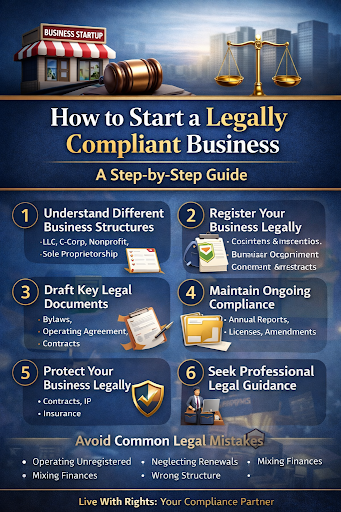
Starting a business is exciting, but navigating the legal requirements can be complex. A legally compliant business protects you from fines, lawsuits, and operational interruptions. This guide breaks down everything you need to know to start your business on the right side of the law in 2026.
- Understand Different Business Structures
Choosing the right legal structure is the first and most important step in forming a compliant business. Each structure has different legal obligations, liability protections, and tax implications:
- LLC (Limited Liability Company): Offers personal liability protection and flexible management options. Perfect for startups and small businesses.
- Corporation (C-Corp / S-Corp): Ideal for businesses seeking investors. Provides structured governance and shareholder protections.
- Nonprofit: Designed for organizations with charitable or social missions. Must comply with IRS and state nonprofit regulations.
- Sole Proprietorship: Simple to start but offers no personal liability protection. Best for low-risk businesses.
Pro Tip: Choosing the wrong structure can increase your tax liability or expose you to personal risk. Consult professionals before making a decision.
- Register Your Business Legally
Proper registration is essential to operate legally. Depending on your business type and location, registration may include:
- Federal EIN (Employer Identification Number): Required for taxes, opening a business bank account, and hiring employees.
- State Registration: File Articles of Organization (LLC) or Articles of Incorporation (Corporation) in your state.
- Business Licenses & Permits: Some industries require special licenses or permits to operate legally, such as food services, healthcare, or finance.
Legal Tip: Operating without proper registration can result in fines, penalties, or closure of your business.
- Draft Key Legal Documents
Creating proper legal documents ensures clarity in operations and prevents disputes. Common documents include:
- Operating Agreements (for LLCs): Defines ownership, roles, and responsibilities.
- Bylaws (for Corporations): Governs the management structure and corporate procedures.
- Shareholder Agreements: Outlines rights and obligations of shareholders in a corporation.
- Nonprofit Bylaws: Specify governance and compliance rules for nonprofit organizations.
Pro Tip: These documents are not just formalities—they are legally binding contracts. Draft them carefully with professional guidance.
- Maintain Ongoing Compliance
Starting your business is only the first step. Ongoing compliance ensures your business remains legally recognized:
- Annual Reports: Most states require businesses to file annual or biennial reports.
- Registered Agent: Designate a reliable agent to receive legal notices and official documents.
- Licenses & Permits Renewal: Ensure all required permits are up-to-date to avoid penalties.
- Amendments: Update records whenever business details change, such as address, ownership, or business purpose.
Legal Tip: Missing deadlines or failing to file required documents can lead to administrative dissolution of your business.
- Protect Your Business Legally
Legal compliance goes beyond formation and filings. Protect your business with the following:
- Contracts & Agreements: For employees, vendors, and clients. Clear contracts reduce disputes and liability.
- Intellectual Property Protection: Trademark your brand name, logo, or unique products. Consider copyrights and patents if applicable.
- Financial Records: Maintain proper accounting and corporate records for audits or legal proof.
- Insurance: Business insurance can protect against unforeseen events, liability claims, and property damage.
Pro Tip: Protecting your business legally ensures longevity and investor confidence.
- Seek Professional Legal Guidance
Navigating business law can be complex. Services like Live With Rights provide professional guidance to ensure:
- Accurate business filings
- Proper legal structure selection
- Compliance with federal and state regulations
- Document review and management
Working with professionals reduces risks and allows you to focus on growing your business.
- Common Legal Mistakes to Avoid
Many new entrepreneurs make avoidable mistakes that lead to legal issues:
- Operating without proper registration
- Neglecting annual reports or license renewals
- Using informal or incomplete contracts
- Mixing personal and business finances
- Choosing the wrong business structure
Avoiding these mistakes ensures long-term legal compliance and business growth.
Conclusion
Starting a legally compliant business protects your personal assets, ensures smooth operations, and builds credibility with clients and investors. By understanding business structures, registering correctly, maintaining compliance, and protecting your assets, you set your business up for success in 2025 and beyond.
Live With Rights helps entrepreneurs navigate every step of business formation and compliance, offering professional guidance, secure document management, and ongoing support.