 Call us now:

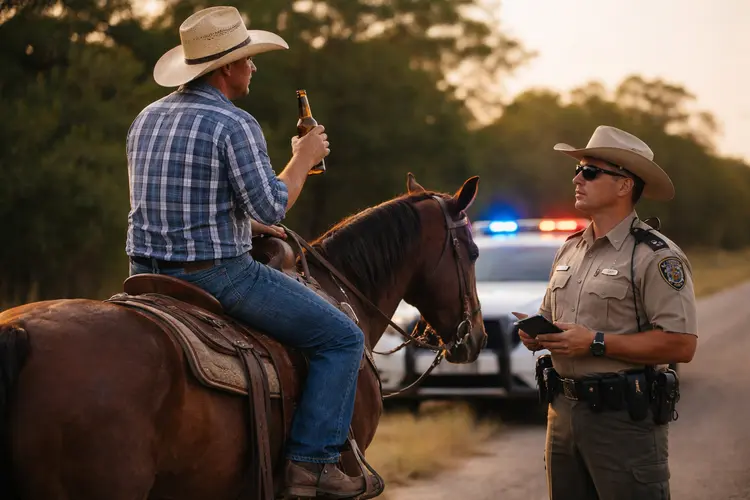
Texas is known for its strong driving laws, rural culture, and deep connection to horseback riding. That combination often leads to a curious and surprisingly common question: Can you get a DUI on a horse in Texas?
At first glance, the idea sounds humorous. But it raises real legal, safety, and responsibility concerns. The short answer is no, you generally cannot get a DUI or DWI for riding a horse while intoxicated in Texas. However, that does not mean it’s legal or consequence-free.
This article breaks down what Texas law actually says, what charges you can still face, and why intoxicated horseback riding can carry serious risks.
What Is a DUI/DWI Under Texas Law?
In Texas, the offense commonly referred to as a “DUI” is legally called Driving While Intoxicated (DWI).
Under Texas law, a person commits a DWI if they:
- Are intoxicated, and
- Are operating a motor vehicle,
- In a public place
Each part of this definition matters. If any one of these elements is missing, a DWI charge does not apply.
The key term for this discussion is “motor vehicle.”
Is a Horse Considered a Motor Vehicle in Texas?
No. Under Texas law, a motor vehicle is defined as a device that is mechanically powered and used to transport people or property on a highway.
A horse:
- Is a living animal
- Is not mechanically powered
- Does not meet the statutory definition of a motor vehicle
Because of this, riding a horse does not qualify as operating a motor vehicle, even if you are on a public road.
This distinction is the foundation of why a DWI charge does not apply to horseback riding.
So, Can You Get a DUI on a Horse in Texas?
No — you cannot be charged with a DUI or DWI in Texas solely for riding a horse while intoxicated.
Texas DWI laws apply strictly to motor vehicles. Since a horse is not a motor vehicle, law enforcement cannot use DWI statutes to charge someone for drunk horseback riding.
That said, this is where many people misunderstand the law. Not being guilty of DWI does not mean your behavior is legal or protected.
Laws You Can Still Be Charged With While Riding a Horse Drunk
While DWI is off the table, several other Texas laws can still apply.
Public Intoxication
Texas law allows police to arrest someone for public intoxication if:
- They are in a public place, and
- They are intoxicated to the degree that they may endanger themselves or others
If you are visibly drunk while riding a horse—especially near traffic, pedestrians, or businesses—law enforcement may determine that you pose a safety risk.
Public intoxication is typically a Class C misdemeanor, but it can still involve arrest, fines, and a criminal record.
Animal Cruelty or Endangerment
Texas law places responsibility on individuals to care for and protect animals under their control.
If intoxicated riding:
- Causes injury to the horse
- Leads to neglect, exhaustion, or dangerous handling
- Results in the animal being placed in unsafe conditions
You could face animal cruelty or endangerment charges. These offenses can carry serious penalties, especially if harm occurs.
Traffic and Safety Violations
Horses are sometimes legally allowed on roadways, particularly in rural areas. However, intoxicated riding can still lead to violations such as:
- Obstructing traffic
- Creating hazardous road conditions
- Ignoring traffic control devices
- Causing accidents involving vehicles or pedestrians
If your actions result in property damage or injuries, additional charges may apply.
Can You Ride a Horse on Texas Roads or Highways?
Texas law generally allows horseback riding on certain roads, particularly in rural or agricultural areas. However:
- High-speed highways may prohibit animals
- Local ordinances may restrict horseback riding
- Urban areas often have stricter regulations
Even where riding is permitted, riders are expected to act responsibly and follow safety rules. Intoxication can quickly turn a lawful activity into a dangerous or illegal one.
What Happens If You Cause an Accident While Riding Drunk?
If an accident occurs while you are riding a horse intoxicated, the consequences can escalate quickly.
Possible outcomes include:
- Criminal charges (public intoxication, reckless conduct, animal cruelty)
- Civil lawsuits for injuries or property damage
- Liability for veterinary bills or medical expenses
- Seizure of the animal in severe cases
While a DWI charge still wouldn’t apply, the legal and financial consequences can be significant.
How Texas Law Compares to Other States
Texas is not alone in excluding horses from DWI statutes, but laws vary widely by state.
Some states:
- Explicitly allow intoxicated horseback riding (with restrictions)
- Apply broader DUI laws to “vehicles,” including animals
- Leave enforcement to local ordinances
This variation is why viral stories often circulate about people being arrested for “DUI on a horse” in other states. Texas law is more narrowly defined, which works in favor of riders—but only to a point.
Real-World Perspective: Why This Still Matters
Even though the law may not label it as DWI, intoxicated horseback riding can be:
- Dangerous to the rider
- Stressful or harmful to the horse
- Risky for drivers and pedestrians
Horses are large, powerful animals that require coordination, judgment, and awareness. Alcohol impairs all three.
Law enforcement officers also have discretion. If they believe a situation is unsafe, they can intervene under other statutes—even without a DWI charge.
Safety, Ethics, and Responsible Riding
Legal loopholes should never replace common sense. Responsible horseback riding means:
- Staying sober while riding
- Prioritizing animal welfare
- Avoiding public roads when impaired
- Understanding local laws and ordinances
From both a safety and ethical standpoint, riding a horse while intoxicated puts lives at risk—including the animal’s.
Frequently Asked Questions
Can police stop you if you’re riding a horse in Texas?
Yes. Police can stop and question riders if they believe a law is being violated or a safety risk exists.
Can you lose your driver’s license for riding a horse drunk?
No. Since it’s not a motor vehicle offense, your driver’s license is not affected.
Is horseback riding considered transportation under Texas law?
In some contexts, yes—but not as a motor vehicle.
Can you be arrested even without a DWI charge?
Yes. Public intoxication or other offenses can still result in arrest.
Final Verdict: What You Should Know Before Riding After Drinking
To summarize:
- You cannot get a DUI or DWI on a horse in Texas
- You can still be arrested or charged under other laws
- Public intoxication, animal cruelty, and safety violations still apply
- Accidents can lead to serious criminal and civil consequences
Texas law may not treat a horse like a car, but it still expects riders to act responsibly. When alcohol is involved, the safest and smartest choice is simple: don’t ride.
