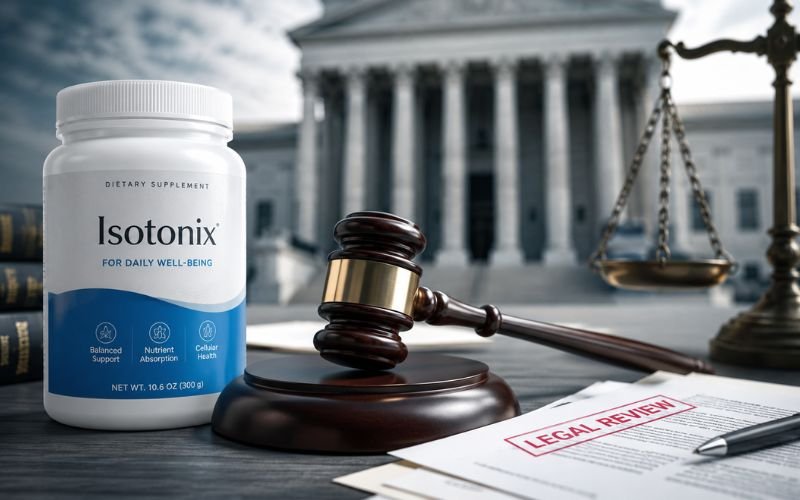
For years, Isotonix has been promoted as a premium nutritional supplement brand that uses an isotonic delivery system, which the company says helps nutrients absorb more efficiently than traditional tablets or capsules. Sold exclusively through Market America, the products have attracted loyal customers and thousands of independent distributors.
However, in recent years, online searches for the Isotonix lawsuit have increased significantly. Consumers, distributors, and industry observers are looking for answers about legal disputes, regulatory scrutiny, and allegations involving the company behind the brand.
The lawsuits and complaints do not centre on a single legal issue. Instead, they involve a combination of concerns, including:
- Allegations related to the company’s multi-level marketing (MLM) business model.
- Claims made about certain nutritional supplements.
- Regulatory actions involving advertising and marketing practices.
- Disputes raised by former distributors.
- Consumer questions about product safety and business practices.
It is important to distinguish between allegations and proven legal findings. Not every complaint results in liability, and several claims remain disputed. This article explains the available public information, the current legal landscape, and what consumers should know before purchasing or promoting Isotonix products.
What Is Isotonix?
Isotonix is a line of powdered dietary supplements marketed by Market America, a company founded in 1992 that sells health, wellness, beauty, and household products through a network of independent distributors.
Unlike conventional supplements, Isotonix products are mixed with water before consumption. The company states that this creates an isotonic solution intended to improve nutrient absorption.
Popular products include:
- Isotonix OPC-3
- Isotonix Multivitamin
- Isotonix Vitamin D
- Isotonix Calcium Plus
- Isotonix Digestive Enzymes
- Isotonix B-Complex
The supplements are marketed to support various aspects of health, including:
- Immune function
- Heart health
- Bone health
- Energy production
- Digestive wellness
- General nutrition
Because these products are classified as dietary supplements, they are not approved by the U.S. Food and Drug Administration (FDA) to diagnose, treat, cure, or prevent diseases. Manufacturers are responsible for ensuring that their products comply with applicable laws governing supplement safety and marketing.
Why Is the Isotonix Lawsuit Getting Attention?
Interest in the Isotonix lawsuit has grown because it touches on several broader issues that frequently arise in the dietary supplement and MLM industries.
Consumers are asking questions such as:
- Has Isotonix been sued?
- Is Market America facing legal action?
- Are the products safe?
- Is the business model legal?
- What have regulators said about the company’s advertising?
Rather than one large nationwide class action involving every Isotonix product, the legal history consists of multiple lawsuits, regulatory actions, distributor disputes, and consumer complaints spanning several years.
These matters have contributed to increased public scrutiny of both the products and the company’s business practices.
Understanding the Main Legal Issues
Several different legal concerns have appeared in lawsuits, regulatory investigations, and public complaints involving Market America and, by extension, Isotonix products.
1. Marketing and Advertising Claims
One recurring issue involves statements made about dietary supplements.
Federal law requires that advertising claims be truthful, supported by reliable evidence, and not misleading.
Some regulators and critics have questioned whether certain promotional statements made by distributors or in marketing materials adequately supported health-related claims.
It’s worth noting that marketing by independent distributors can create additional compliance challenges because distributors may make statements that go beyond company-approved materials.
2. Multi-Level Marketing (MLM) Practices
Market America operates using a multi-level marketing model.
Under this system:
- Independent distributors sell products.
- Participants may earn commissions on personal sales.
- Additional compensation may be available from sales generated by recruited distributors, subject to the company’s compensation plan.
MLM businesses are legal in the United States when they primarily generate revenue through genuine product sales rather than recruitment alone. However, regulators often examine whether an MLM’s compensation structure complies with consumer protection laws.
Former distributors have raised concerns about:
- Earnings expectations.
- Training costs.
- Inventory purchases.
- Recruitment pressure.
- Long-term profitability.
These concerns have appeared in lawsuits and online complaints, although experiences vary among participants.
3. Consumer Protection Concerns
Some legal disputes have focused on whether consumers received accurate information about:
- Product benefits
- Refund policies
- Income opportunities
- Marketing representations
Consumer protection laws generally prohibit deceptive or misleading business practices. When disputes arise, courts evaluate the evidence presented by both sides before determining whether legal violations occurred.
The Relationship Between Isotonix and Market America
One common misunderstanding is that Isotonix and Market America are separate companies.
In reality:
- Market America is the parent company.
- Isotonix is one of its flagship supplement brands.
- Most lawsuits are filed against Market America, its affiliated entities, or individuals connected with the business rather than the Isotonix brand itself.
As a result, searches for the “Isotonix lawsuit” often refer to broader legal matters involving Market America’s operations.
Have Government Agencies Investigated Market America?
Yes. Over the years, government agencies have taken actions involving various aspects of Market America’s business practices.
These actions have generally focused on:
- Advertising compliance
- Income representations
- Marketing claims
- Consumer protection requirements
Regulatory scrutiny does not automatically mean a company has been found liable for every allegation. In many situations, businesses cooperate with regulators, resolve matters through settlements, or modify their business practices without admitting wrongdoing.
Consumers should therefore review official court filings, settlement agreements, and regulatory announcements rather than relying solely on social media discussions or online rumours.
As public interest in the Isotonix lawsuit has grown, many people have assumed there is one nationwide class action against the supplement brand. In reality, the legal history is more complex. It involves regulatory scrutiny, disputes involving Market America, consumer complaints, and litigation concerning the company’s business practices rather than a single lawsuit against every Isotonix product.
Below is a closer look at the most significant developments.
Timeline of Key Events
Understanding the timeline helps explain why searches for “Isotonix lawsuit” continue to increase.
1992 – Market America Is Founded
Market America launched as a direct-selling company offering health, beauty, and household products through independent distributors.
Its compensation model relied on both product sales and distributor recruitment.
Early 2000s – Expansion of Isotonix Products
The company expanded its Isotonix supplement line internationally.
Marketing focused on:
- Faster nutrient absorption
- Premium formulations
- Scientific research
- Wellness benefits
During this period, the brand developed a strong distributor network and loyal customer base.
Growing Regulatory Attention
As the dietary supplement industry expanded, regulators increased oversight of companies making health-related advertising claims.
Like many supplement companies, Market America faced questions regarding:
- Product marketing
- Income representations
- Distributor advertising
- Compliance with consumer protection requirements
This scrutiny reflected broader enforcement efforts across the direct-selling and supplement industries rather than action against one product alone.
2026 Update
As of 2026, there has not been a court ruling declaring every Isotonix product unlawful or banning the brand from sale. The products continue to be marketed by Market America, although discussions about past regulatory actions, distributor disputes, and marketing practices remain common online.
FTC and Consumer Protection Concerns
One of the most discussed topics surrounding Market America involves compliance with consumer protection laws.
The focus has generally been on whether:
- Advertising claims were adequately supported.
- Income opportunities were presented accurately.
- Distributors complied with company policies.
- Marketing materials could mislead consumers.
Regulators often evaluate whether health-related claims are backed by competent scientific evidence and whether income representations create unrealistic expectations.
Importantly, regulatory investigations do not automatically establish that every allegation is true. In some cases, companies resolve concerns through settlements, policy changes, or compliance agreements without admitting liability.
Product Safety Concerns
Another reason consumers search for the Isotonix lawsuit is concern about product safety.
Most online discussions involve questions such as:
- Are Isotonix supplements FDA approved?
- Have products been recalled?
- Are there serious side effects?
- Can the supplements interact with medications?
At present:
- Isotonix products are sold as dietary supplements, not prescription medicines.
- Dietary supplements are not approved by the FDA before they reach the market.
- Manufacturers are responsible for ensuring product quality and accurate labelling.
Like many supplements, certain ingredients may interact with prescription medications or be unsuitable for some individuals, including pregnant women or people with underlying medical conditions. Consumers should consult a qualified healthcare professional before beginning any new supplement regimen.
Are There Allegations of False Advertising?
One recurring issue involves marketing language.
Critics have argued that some promotional statements made by distributors may have suggested benefits beyond what was supported by available scientific evidence.
Examples of claims that commonly attract regulatory attention across the supplement industry include statements suggesting a product can:
- Cure diseases
- Prevent serious illnesses
- Replace medical treatment
- Deliver guaranteed health outcomes
Federal law generally requires such claims to be supported by reliable scientific evidence.
Market America has maintained that it has compliance policies for distributors and that authorised marketing should follow applicable legal requirements.
Distributor Complaints and Business Model Disputes
Not every legal dispute involving Market America has come from consumers. Some have been raised by current or former distributors.
Common concerns reported over the years include:
- High expectations regarding earnings.
- The amount of time needed to build a successful business.
- Costs associated with training, events, or maintaining the business.
- Pressure to recruit additional distributors.
- Difficulty earning consistent profits.
It is important to recognise that distributor experiences vary widely. While some participants report positive outcomes, others state that they did not recover their investment or meet their financial expectations.
Pyramid Scheme Allegations Explained
A common online question is whether Market America has been accused of operating a pyramid scheme.
The answer requires some legal context.
A pyramid scheme is an illegal business model in which compensation is primarily based on recruiting new participants rather than selling genuine products or services.
By contrast, a lawful multi-level marketing (MLM) company generally generates revenue from retail sales, with recruitment playing a secondary role.
Some lawsuits and complaints have alleged that Market America’s compensation structure placed excessive emphasis on recruitment. The company has denied operating an illegal pyramid scheme and has consistently stated that its business is based on legitimate product sales.
Whether an MLM crosses the legal line depends on the specific facts of each case, including how compensation is earned and how the business operates in practice.
Scientific Debate Over the Isotonic Delivery System
A feature frequently highlighted in Isotonix marketing is its isotonic delivery system.
According to Market America, mixing the powder with water creates a solution that allows nutrients to be absorbed efficiently by the body.
Some researchers and healthcare professionals acknowledge that liquid formulations may be appropriate in certain situations. However, critics argue that the evidence does not necessarily establish that isotonic supplements provide superior health outcomes compared with traditional tablets or capsules for every consumer.
This scientific debate differs from a legal finding. Questions about marketing claims and product performance are often evaluated separately from issues of product safety.
What Do These Legal Issues Mean for Consumers?
For most consumers, the legal discussions surrounding Isotonix highlight the importance of making informed purchasing decisions.
Before buying any dietary supplement, consider the following:
- Read the ingredient list carefully.
- Review the manufacturer’s instructions.
- Be cautious of claims that sound too good to be true.
- Discuss supplements with your healthcare provider if you have medical conditions or take prescription medicines.
- Purchase products from authorised sources to reduce the risk of counterfeit or improperly stored items.
Legal disputes involving a company do not automatically mean that every product is unsafe, but they can encourage consumers to look more closely at advertising claims and available scientific evidence.
What Is the Current Status of the Isotonix Lawsuit?
As of 2026, there is no single nationwide class action lawsuit that has resulted in a court ruling declaring all Isotonix products unsafe or illegal. Instead, public discussion around the “Isotonix lawsuit” generally refers to a combination of:
- Litigation involving Market America and its business practices.
- Allegations related to its multi-level marketing (MLM) model.
- Regulatory actions concerning product manufacturing, advertising, and compliance.
- Complaints from some distributors and consumers.
For example, in 2020, the U.S. Food and Drug Administration (FDA) issued a warning letter to Market America citing manufacturing and regulatory compliance issues involving certain dietary supplement operations. A warning letter is a regulatory enforcement action requiring corrective measures—it is not a judicial finding that all Isotonix products are unsafe.
Similarly, lawsuits filed by former distributors challenged aspects of Market America’s compensation structure and alleged that the company operated as an unlawful pyramid scheme. Market America has denied those allegations.
Can Consumers Still File a Lawsuit?
Whether someone can file a lawsuit depends on the specific facts of their situation.
A consumer may wish to consult an attorney if they believe they experienced issues such as:
- A serious injury allegedly linked to a product.
- Financial loss caused by misleading representations.
- A dispute over refunds or warranties.
- Other legal claims recognised under applicable state or federal law.
Likewise, distributors who believe they suffered financial harm may have different legal rights depending on their contracts, the facts of their case, and the laws of the jurisdiction involved.
Because limitation periods vary, anyone considering legal action should seek legal advice promptly.
Who May Be Affected?
The legal issues surrounding Market America may be relevant to several groups.
Consumers
Consumers should carefully evaluate:
- Product ingredients.
- Health claims.
- Potential interactions with medications.
- Whether a supplement is appropriate for their individual health needs.
Independent Distributors
Individuals interested in joining an MLM business should understand:
- The compensation plan.
- Expected business expenses.
- Average earning disclosures, if available.
- The time and effort required to build a customer base.
Reading the company’s official policies and independent information can help set realistic expectations.
Healthcare Professionals
Healthcare providers may be asked questions about:
- Supplement ingredients.
- Scientific evidence supporting health claims.
- Potential side effects.
- Drug interactions.
Patients should always disclose the supplements they are taking before beginning new medical treatment.
Lessons for Consumers
The Isotonix controversy highlights several important lessons that apply to nearly every dietary supplement.
Before purchasing any supplement:
- Research the manufacturer.
- Read independent reviews from reliable sources.
- Avoid relying solely on testimonials.
- Be cautious of promises of dramatic or guaranteed results.
- Follow the recommended dosage.
- Consult your healthcare provider if you have existing medical conditions or take prescription medicines.
A balanced approach is usually the safest one.
Frequently Asked Questions (FAQs)
Is there an active Isotonix class action lawsuit?
As of 2026, there is no verified nationwide class action lawsuit focused solely on Isotonix products. Public discussion typically relates to litigation involving Market America and its business practices rather than a single product-specific class action.
Is Isotonix banned in the United States?
No. Isotonix products continue to be sold in the United States. However, like other dietary supplements, they remain subject to FDA regulations governing manufacturing, labelling, and marketing.
Has the FDA recalled Isotonix products?
There is no general FDA recall covering all Isotonix products. However, Market America has previously received FDA warning letters addressing regulatory compliance issues. A warning letter should not be confused with a nationwide recall.
Is Market America a pyramid scheme?
Some lawsuits have alleged that Market America’s compensation structure functioned as an illegal pyramid scheme. Market America disputes those allegations and maintains that it operates a lawful direct-selling business based on product sales. Whether a business is an unlawful pyramid scheme depends on the evidence presented in court and applicable law.
Are Isotonix supplements safe?
Many people use Isotonix products without reporting serious problems. However, no dietary supplement is risk-free for everyone. Safety depends on factors such as the product’s ingredients, dosage, existing health conditions, allergies, and interactions with medications. Consumers should follow label directions and consult a healthcare professional when appropriate.
Should I stop taking Isotonix because of the lawsuits?
Legal disputes alone do not necessarily mean a product is unsafe. If you have concerns about a supplement you are taking, speak with your doctor or pharmacist before making changes to your health routine.
Final Verdict
The phrase “Isotonix lawsuit” has become a catch-all term for several legal and regulatory issues involving Market America rather than a single lawsuit against every Isotonix product.
While lawsuits have raised questions about marketing practices, distributor compensation, and regulatory compliance, it is equally important to distinguish between allegations, regulatory actions, settlements, and final court rulings. As of 2026, there has been no court decision declaring all Isotonix products unlawful or unsafe for consumers.
For consumers, the best approach is to evaluate supplements based on credible scientific evidence, consult qualified healthcare professionals when needed, and avoid relying solely on advertising claims or social media discussions. For prospective distributors, understanding the business model, compensation structure, and potential risks is essential before making a financial commitment.
Ultimately, informed decision-making—not speculation—is the best way to navigate any controversy involving dietary supplements or direct-selling companies.