A Costco member in California says the retailer’s renewal reminder arrived two months too early — and under state law, that’s not a minor detail. It’s the entire basis of a proposed class-action lawsuit now working its way through federal court, one that has nothing to do with fraud claims and everything to do with whether Costco followed the fine print of California’s consumer notice rules.
What the Lawsuit Alleges
The case was filed in March 2026 by Russel George (also referenced as Russel George II) against Costco Wholesale Corporation in the U.S. District Court for the Northern District of California. George had purchased a $65-a-year Gold Star membership online back in 2023. Court documents state that Costco sent him a renewal reminder roughly 60 days before his membership was due to renew, and his card was ultimately charged on January 2, 2026.
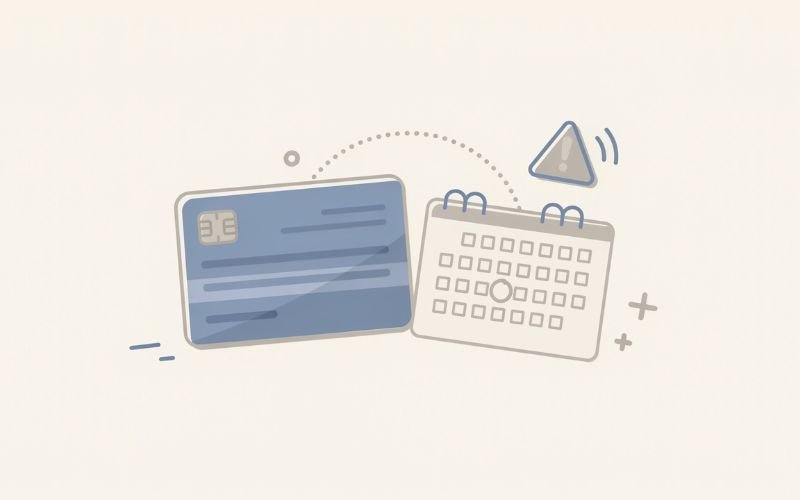
That 60-day gap is the heart of the complaint. California’s Automatic Renewal Law (ARL) requires renewal notices to arrive no earlier than 45 days and no later than 15 days before the charge — a 30-day window built around the idea that consumers need enough time to act, but not so much that they forget the notice ever existed. Because Costco’s email reportedly landed well before that window opened, George argues it didn’t legally count as proper notice at all.
Beyond timing, the filing claims the notice itself was thin on required details — it allegedly didn’t state the exact renewal amount, spell out the terms of the renewal, or explain clearly how to cancel. Those aren’t cosmetic omissions under California law; they’re specific disclosures the ARL requires. Based on these allegations, the complaint brings claims under four California statutes: the Automatic Renewal Law, the False Advertising Law, the Consumers Legal Remedies Act, and the Unfair Competition Law. George is seeking a jury trial, declaratory and injunctive relief, and damages for himself and a proposed class of similarly situated members. None of this has been decided — these remain allegations in a filed complaint, not conclusions reached by a court.
Why a 30-Day Window, and Why 60 Days Misses It
It’s worth pausing on why California’s law works this way, because the logic isn’t obvious at first. More advance notice sounds like it should be better for consumers, not worse. But regulators drafting the ARL were solving for a specific failure mode: reminders that arrive too far ahead of a charge tend to get read, mentally filed away, and then forgotten by the time the money actually moves. A 15-to-45-day window forces the notice to land close enough to the actual charge that it still means something when the consumer sees it.
That’s also why this case is likely to turn less on whether Costco acted in bad faith and more on a fairly mechanical question: did the notice, as sent, satisfy the statute’s timing and content requirements. Courts handling ARL claims tend to treat this as a compliance question first — closer to reviewing whether a form met a checklist than weighing intent or deception. That’s also usually why these cases move through procedural stages like class certification before questions of damages ever come up, and why a filed complaint is a long way from a finding of liability.
California’s Auto-Renewal Rules Just Got Stricter
This lawsuit also arrives right after California tightened the ARL itself. Assembly Bill 2863, signed in September 2024, amended the law with new provisions that took effect July 1, 2025 — after George’s original 2023 sign-up, but squarely within the window covering his 2026 renewal. Under the amended law, businesses must get a consumer’s clear, affirmative consent to renewal terms before charging them, and if someone signed up for a service online, the business now has to let them cancel through that same online channel, without extra hurdles.
That last point is worth sitting with. A lot of the frustration consumers report with subscription cancellations isn’t the renewal notice at all — it’s discovering that canceling requires a phone call or an in-person visit even though signing up took thirty seconds online. The amended ARL was written specifically to close that gap. Costco’s current cancellation process — phone or in-store only — predates this framing, and it’s a detail worth watching as the case, and California’s broader enforcement posture, develops.
Where This Fits Into Costco’s Broader 2026 Legal Troubles
This lawsuit isn’t happening in isolation. Costco has faced an unusually active stretch of litigation in 2026, including two separate suits over rotisserie chicken labeling and another tied to tariff-related pricing changes. None of these cases share a legal theory with the auto-renewal complaint, but together they point to a company facing more consumer-facing scrutiny than usual across very different parts of its business.
The auto-renewal case also sits inside a much bigger, ongoing fight over subscription transparency generally — one that touches streaming platforms, gyms, software, and news outlets just as much as warehouse clubs. In 2024, the FTC tried to set a nationwide standard with its “click-to-cancel” rule, which would have required cancellation to be as easy as signing up. A federal appeals court struck that rule down in July 2025, but on procedural grounds tied to how the FTC wrote the rule, not because regulators disagreed with the underlying idea. That leaves a gap: there’s currently no federal auto-renewal standard filling that space, which is a large part of why state laws like California’s ARL — freshly strengthened by AB 2863 — keep showing up as the main legal tool consumers actually have.
What This Means for Costco Members
None of this changes anything automatically for current members — the case is still a proposed class action, and a court has to decide whether it can even proceed on a class-wide basis before it affects anyone beyond George himself. But it’s a reasonable prompt to actually look at your own renewal notice next time one lands in your inbox: check the date against your actual renewal, confirm the amount matches what you expect, and make sure the cancellation instructions are clear rather than buried. Costco currently lets members cancel by calling its toll-free line or visiting a warehouse in person, so that option exists regardless of how this case resolves.
It’s also a decent argument for keeping your contact email current with any subscription service, not just Costco — a missed or outdated email is a much bigger risk to your wallet than a technically late notice. And if you signed up for something online recently, it’s worth knowing that under California’s amended ARL, you may now have a legal right to cancel it the same way, without being routed to a phone line.
FAQ
What is the Costco auto-renewal legal challenge about?
A proposed class-action lawsuit alleges Costco sent a membership renewal notice around 60 days before the actual charge, which the plaintiff says falls outside California’s required 15-to-45-day window, and that the notice was also missing required disclosures.
Has Costco been found liable?
No. This is a filed complaint in federal court. The allegations haven’t been proven, and no court has ruled that Costco violated the law.
What laws does the lawsuit rely on?
The complaint cites California’s Automatic Renewal Law, the False Advertising Law, the Consumers Legal Remedies Act, and the Unfair Competition Law.
Can Costco members still cancel their memberships?
Yes — Costco currently allows cancellation by phone through its toll-free line or in person at a warehouse.
Why does California’s Automatic Renewal Law matter here?
It sets a specific timing window for renewal notices and requires them to clearly disclose the charge amount, terms, and cancellation method — designed to give consumers a real, informed opportunity to cancel before being billed. Recent amendments under AB 2863 also require online sign-ups to be cancellable online.
Closing
This case isn’t a challenge to automatic renewals as a business model — Costco, like most subscription-based companies, is free to renew memberships automatically. What’s actually being tested is narrower and more procedural: whether one company’s notice, sent on its own schedule, met the specific legal window a state legislature decided actually protects consumers. How the court answers that will say a lot about how strictly ARL-style laws get enforced going forward — for Costco, and for every other subscription business watching this case.
Disclaimer: This article is provided for general informational purposes only and does not constitute legal advice.