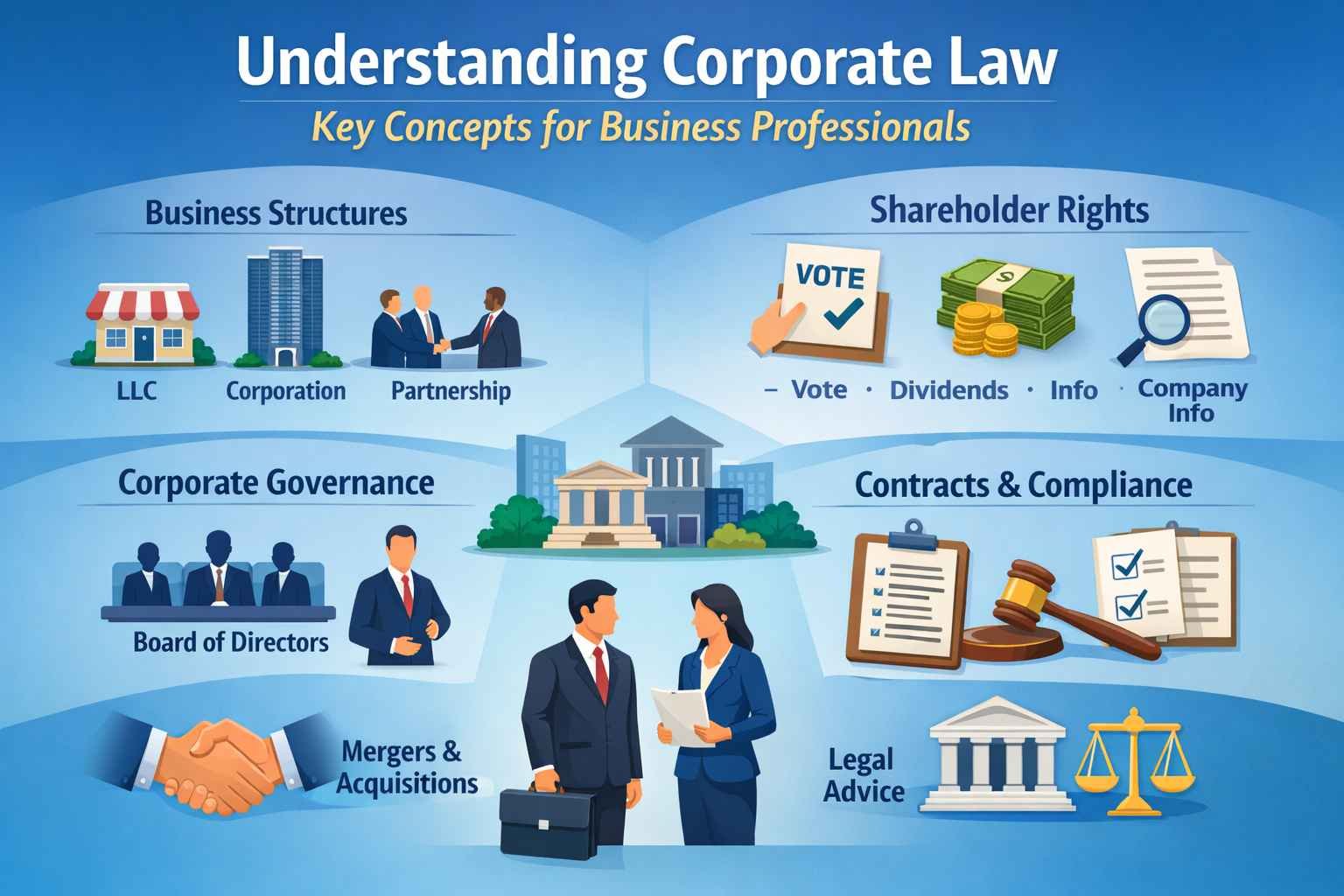
Corporate law might sound complicated, but it’s really just the set of rules that helps businesses run legally. If you’re a business professional, knowing the basics of corporate law can help you make smart decisions, avoid legal trouble, and keep your business on track. Let’s break it down in simple terms.
1. What is Corporate Law?
Corporate law is the law that deals with companies. It tells businesses how to form, manage, and operate. It also covers how companies interact with their owners, employees, and other businesses.
In short, corporate law is like a rulebook for companies. If you follow it, your business runs smoothly. If you ignore it, you could face fines, lawsuits, or other problems.
2. Different Types of Businesses
Before you start a business, you need to pick a legal structure. Corporate law helps you do that. Common types are:
- Sole Proprietorship: Owned by one person. Simple but you are personally responsible for debts.
- Partnership: Two or more people share ownership and responsibility.
- Corporation: A separate legal entity. Owners (shareholders) have limited liability.
- Limited Liability Company (LLC): A mix between a corporation and partnership, offering flexibility and protection.
Choosing the right type affects your taxes, legal responsibility, and how your business is run.
3. Corporate Governance
Corporate governance is about how a company is managed. It makes sure decisions are fair and legal.
Key parts of governance:
- Board of Directors: Makes big decisions and oversees the company.
- Shareholders: Own the company and can vote on major choices.
- Executives: Handle daily operations.
Good governance keeps everyone accountable and helps avoid legal problems.
4. Shareholder Rights
Shareholders are the owners of a company. Corporate law protects their rights, such as:
- Voting on important issues
- Receiving profits (dividends)
- Accessing company information
Knowing shareholder rights helps business professionals balance ownership and management effectively.
5. Contracts and Agreements
Businesses make contracts all the time. Corporate law makes sure contracts are legal and fair.
Things to know:
- A contract is valid when both parties agree.
- Breaching a contract can lead to legal trouble.
- Employment agreements protect both employees and employers.
Simple contracts done right prevent misunderstandings and lawsuits.
6. Compliance and Legal Requirements
Every business must follow the law. Corporate law helps you:
- File annual reports and pay taxes
- Follow labor, safety, and environmental laws
- Keep proper records of meetings and finances
Breaking the law can cost your business money or even shut it down.
7. Mergers and Acquisitions
If your company buys another company or merges with one, corporate law guides the process:
- Check the other company’s finances and legal documents
- Sign proper agreements
- Get government approval if needed
Following these rules makes big business deals safe and legal.
8. Why You Need a Lawyer
Even if you understand the basics, a lawyer helps:
- Set up your business correctly
- Review contracts
- Ensure compliance with laws
- Solve legal problems quickly
Having a lawyer saves time, money, and stress.
Conclusion
Corporate law may seem complicated, but it’s really about keeping your business legal and safe. By understanding the basics like business types, governance, shareholder rights, and contracts you’ll make smarter decisions and avoid costly mistakes.